




Episode Transcript
Read the full transcript below:

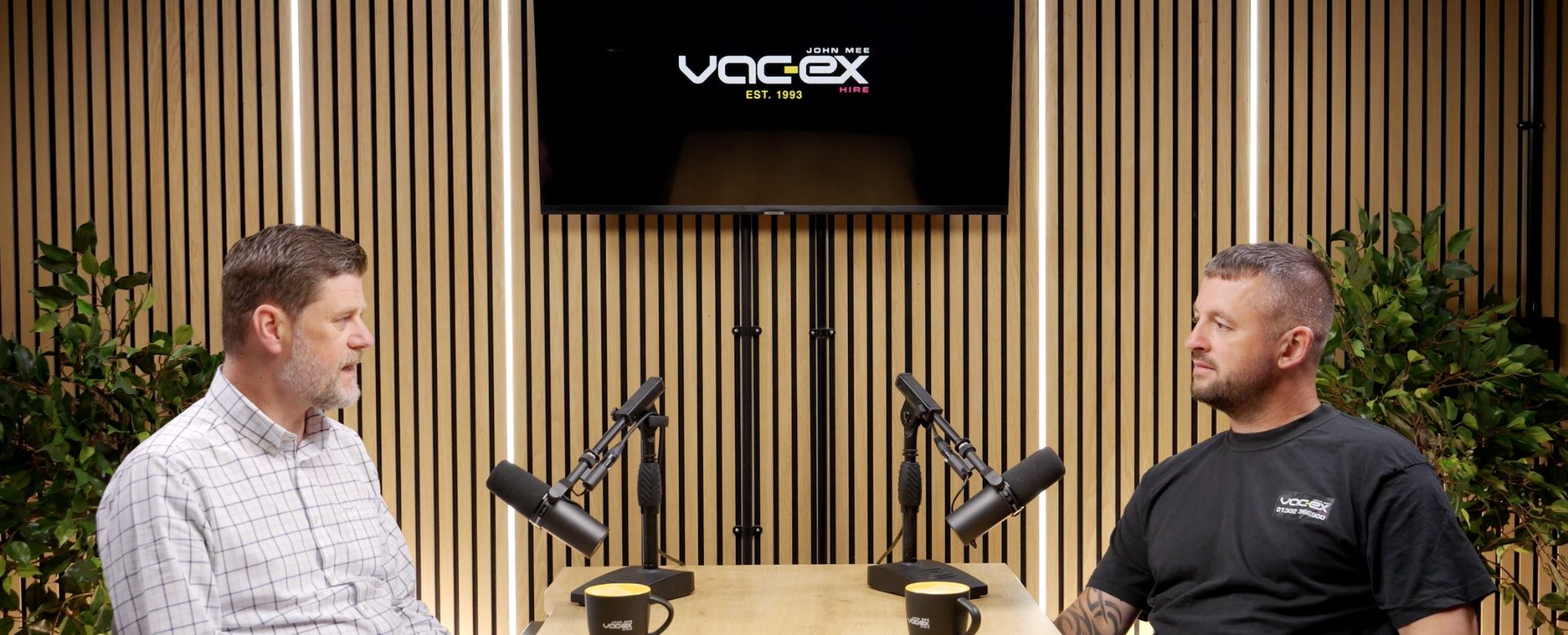
From operating specialist vacuum excavation equipment and working alongside site teams to making important decisions when a job doesn’t go to plan, there’s much more to the role than simply operating the machine.
In this episode of The Vac-Ex Podcast, Dave is joined by Luke, who spent several years working as a vacuum excavation operator before progressing into his current role as a supervisor.
Read the full transcript below:
Massive respect goes out to the operators who work around the country because it’s not easy.
How often are you effectively digging blind?
You’re not just digging at all. You are operating around infrastructure that has the potential to kill you.
Yeah. What does a good operator have to think about other than just operating the machine? Because that’s probably about 10–15% of the role, isn’t it?
The standard of living that’s provided for my family, the different places I’m seeing, there is a lot of rewards for what you do.
You were at a juncture in life before you joined Vac-Ex, whether to go back in the army, the mob, or do Vac-Ex.
Did you make the right call? Would you do it again?
So Luke, as one of our, obviously now supervisor, but one of our most experienced operators, about 10 years you’ve done, haven’t you?
Yeah. Yeah.
So those that haven’t done it before, what do they assume that Vac-Ex is all about? As in doing the job?
Turning up to a site, I believe, and digging a hole and then that’s it. But there’s a lot more to that.
It’s quite a technical role, isn’t it?
Very technical, depending on where we are, what infrastructure we’re working on. There is a lot involved.
Right. Okay. So just what do you mean by that? How?
So if we’re working on, like, the gas jobs where we’re doing domestic, it’s more a number of holes in the day. So there might be 20 holes to do connections to the houses. They’re quite basic, simple.
But then we work on more technical side of things – nuclear, compressor stations for gas. That’s where we’re working around assets that, if something does go wrong, it goes wrong in a big way.
Yeah. So when you’re, you know, down the pub or whatever, out with your mates and whatever, what do they think you do?
I use a big hoover.
Is that what they think? It looks like that, doesn’t it?
It sounds like one. [laughter]
Yeah. It’s a very noisy big hoover.
Yeah.
But the actual mechanics of what it is are far more advanced than just sucking.
Yeah. Yeah.
And I always tell the new lads, I mean, you look at it, you think that’s easy. Drive a truck, rock up, extend the arm, crack on. It’s not, is it?
I mean, I’ve never done it, to be fair, but yeah, you’ve got to be able to think on your feet.
I mean, first of all, I think massive respect goes out to people that are operators.
Yeah.
I think it’s not just a case of jumping in a wagon and driving somewhere, then, yeah, two-second job. The lifestyle is hard. It’s early starts. It’s away from home.
All weathers. There’s pressures, obviously, from the clients, from the office side, on yourselves. You know, in reality, you’re sort of your own boss. You manage your time, you’re managing the work.
There’s just a lot of responsibility put on people that I think other people outside the industry don’t really understand.
Are you respected on site as a technical operator?
I mean, you’ve got to remember that when we go onto these sites, these guys have been together for – it could be weeks, could be months, could even be years.
You’re just dropped into this team that has been working on the same project for X amount of time and you’re just expected to hit the ground running.
So in that respect, I think they do understand that. But at the same time, they’ve got time pressures and they’ve always used a digger. So in their head, well, it’s just another type of digger.
Yeah.
It does take a little bit longer.
Do you like it?
Yeah. I love it.
What’s good about it?
Every day is different.
Yeah.
Every site’s different. Every interaction with different people is different. Every site manager. I’ve been on sites where I’ve had the directors, who very rarely go on site, come down and everybody’s interested in what you’re doing.
And we’re there because they don’t want to be working in that area.
Yeah.
So they deem that too dangerous. That’s why we go in, do what we do, make it safe, and in that aspect they respect what we’re doing.
So when you’re on site, obviously you turn up as Vac-Ex and all that, and obviously they don’t really know what we do, because clearly the guy that booked us did.
What responsibilities don’t they see? What do you do behind the scenes that enables you to carry out your job?
So it’s more like the managing yourself, I think, is a big thing.
An operator will receive their instructions the day before.
Yeah.
And then that’s on them then. So the operator is responsible, obviously, for getting himself to work on time, which is not just to that site, that’s getting to the yard.
If it’s a three-hour journey down south, the average start time on a construction site would be half seven. It’s an early start. It’s really sort of half a shift before you’ve even got to the destination where you’re going.
Once there, obviously the running of the machine, the maintenance of the machine, the paperwork side of it, you know, your RAMS, making sure these are all understood and you’re signed on.
You know, when you sign on to these documents, it’s not just, “Oh yeah, go on, quick signature, it’s done.” It’s heavily safety regulated.
Massive.
And if anything does go wrong, hopefully it doesn’t, that piece of paper that you’ve signed is going to be the first thing that gets looked at.
That’s your Bible, is it?
Yours.
Yeah. And if you’ve deviated from these RAMS and something’s gone wrong, it’s all on you.
And then, obviously, through the day as well, working, managing the job, managing the – they might assign a group of lads with you. So you’re overseeing them, you’re talking to the site managers.
And then after shift, prepping the machine back in a fit state to go back on the road. And then if you’re going home, that long drive back, or if you’re going to the hotels, you’ve got to navigate that.
Yeah. Yeah. It’s not just operating the machine, is it? A lot more than people realise.
And hence why, obviously, we at Vac-Ex reward quite well because we value quality and you need quality, don’t you? Because obviously if you’ve got a bad guy on there, which you’ve since discovered coming upstairs in the office, when things go wrong they can go wrong very quickly.
They do. Badly.
So you’ve been here 10 years. Can you remember when you first started? What surprised you about the role, day one, week one?
I mean, I think since that time the industry’s changed massively.
Yeah.
Back then, the standards weren’t as high as they are today, especially what we set. The machines themselves were older machines.
Like the standards we set now, our internal workshop, we’ve got all new machines.
It’s the sites we’re working on now and the infrastructure we work on. You have to evolve. We wouldn’t be as successful as we are now if we’d not taken them steps to grow like we have.
Does it surprise you when you rock up on site now to discover that still people don’t know about Vac-Ex? And you’ve been doing it 10 years. It’s probably been going around about 20 years now.
Yeah. I mean, I think the people – when you turn up to jobs where they’ve never seen a Vac-Ex before, I think that’s more they’ve tried to avoid it because obviously the initial cost.
But I think once they see the productivity we can achieve, then the cost, it makes sense.
Well, absolutely. I mean, it’s a no-brainer. We’ve seen it over even just the past five years. The industry is just growing and growing and growing.
There’s a lot of little firms set up. I saw one last night on one of the Facebook pages, actually, in the Midlands that was looking for Vac-Ex operators.
Yeah, it’s exploding, but it’s not easy to run unless you’ve got the infrastructure and the sort of processes behind it, as we’ve discovered.
I mean, we’ve known other companies get these Vac-Exes and soon realise maintaining these machines – that’s the killer, isn’t it?
Yeah. It’s not cheap. It’s not a digger.
No, there is a lot more to it.
Yeah.
It’s a specialised industry.
Obviously, 10 years in, what does a good operator have to think about other than just operating the machine? Because that’s probably about 10–15% of the role, isn’t it? The operation of the machine.
What else do they need to think about? What makes them good?
Probably what’s around them. What environment are they in?
So, I mean, for me, if I go onto a substation, it’s not just a case of turning up and going on. There’s live assets around you that have the potential to kill.
Yeah. Yeah.
You’re always – you’ve got, you know, you’re looking below you, obviously, where you’re working. You’re looking above you, you’re looking to the side of you. You’re looking, is somebody approaching?
Situational awareness has to be on the ball, doesn’t it?
Yeah. Yeah, absolutely.
So the way we operate, obviously, we use a lot of digital systems and all the operators have an app, as you know.
So talk me through – you’re back being an operator again. It’s just about half past five. You’ve just received your notification of what you’re doing the following morning.
Just talk me through the process from the night before and tell me how you feel about it.
Depending on the day you’ve just had, it’s very mixed emotions. You know, am I nice and local?
Yeah.
Do I know it’s going to be quite a steady day, depending on what sort of job it is? I mean, you do get familiar with the clients and what sort of area they work in.
Or am I going away again? Am I packing a bag? Tomorrow morning, you know, that’s it. I’m gone.
So, yeah, look at that. Prepare for the next day. Pack a bag. Early night.
Get the alarm set. Five of them. Make sure we’re up. [laughter]
And then head to the yard, get the machine out. We start doing pre-checks. So we do our HGV checks, we do our machine checks, make sure everything’s secure, ready to go, and we set off to site.
And all that’s sort of recorded and all that?
So it’s all down on the app. So all the checks are done, everything’s recorded, all the mileage, all the machines, all the oil levels, everything’s done. So we know when we get there, we’re good to go.
Quite a thorough check then.
Yeah. I mean, there isn’t a legal requirement for it. Obviously, it’s an HGV at the end of the day, so we treat it as such, but the DVSA see it as a piece of plant.
But it’s not. It’s a 32-tonne truck, and that’s the way we deal with it.
You have to, don’t you?
You’ve got to do your pre-inspections and all that sort of stuff to make sure it’s roadworthy.
So you’ve arrived on site. Let’s assume you’ve never been there before. New site. Just talk me through.
So, arrive on site. Hopefully you see a site office. [laughter]
Yeah.
Hopefully you see a black hat walking past.
What’s a black hat?
That’ll be your site manager.
I’m Vac-Ex. And then you’ll go upstairs, induction. Sign on to your RAMS. Description of where we’re working, what we’re doing, who they’re assigning with you as a second man if we don’t have one ourselves.
Yeah.
And then head around to the—
So what’s the induction? What do they cover in that?
So the induction will be their start and finish times. There’ll be their fire alarm test. There’ll be first aiders.
There’ll be their site layout, emergency escapes, minimum requirements of PPE, speed limits on site.
It will be the areas in which you’re working and what plant movements are happening in that day.
Yeah.
Then deliveries. Is a crane going to be lifting overhead?
It’s quite in-depth then.
Oh, very in-depth. Yeah. I mean, if you were five different jobs in a week, you’re doing five of them a week.
So you get inducted every day?
Different jobs, yeah.
If you’re on the same job and you go back the next day, it’ll be a morning briefing.
So if anything’s changed or any other deliveries or plant movements, you’ll be updated on that.
Okay. And you said a second man. Obviously, sometimes we provide a second man, don’t we, to do the air lance?
Normally, it’s one of our trainees, isn’t it? You’re sort of bringing them on.
If you get one on site, how do you deal with that? Because obviously they’re not trained by us.
Yeah, so they’re there to air lance.
So what would you do as an operator?
They sign on to our RAMS. So we give them a quick explanation of what we expect, show them where the emergency stop buttons are.
If, you know, a scenario, if anything happened, hit this. This cuts everything out.
Then we show them basically an air lance, how to use it correctly, procedures on what to do, what to wear, eye protection, etc. And like I said, they sign on to our RAMS.
So obviously if you’re given a second man by site—
Mhm.
They’re not going to give you the best, are they?
No.
So I imagine you’re now responsible for that individual, are you? This goes back to the responsibilities that people don’t quite see.
Yes, you are responsible for that person, and it can be challenging sometimes.
There could be certain barriers. There might be a language barrier.
Yeah.
When the machine’s going, it doesn’t really matter, I suppose, as long as you can read hand signals. But, you know, when you’re classed as a safety-critical piece of equipment, having that lack of communication sometimes can be a challenge.
Yeah. But you find ways to—
Of course you do.
All right then, moving on. We’ve done, obviously, the night before, the five alarms and all that sort of winding the wife up, you know, obviously she’s not ironing your stuff. [laughter]
So you’ve arrived on site, you’ve gone through your induction, you’ve got your second man.
What’s next? What do you do?
Well, move the machine around to the job where we’re digging. Assess what’s around. Sort of, you know, what’s around the area.
So if there’s overheads—
What do you mean by overheads, as in power lines?
Yeah, there could be power lines. There could be pipes, depending on if you’re working on a compressor station.
I mean, we work on nuclear. Obviously nuclear uses steam. So when you go on a nuclear site, there’s steam pipes everywhere. You know, you could be working under them.
We also then look maybe for things in the roads or in the path, in the grass. So we’re looking at drainage. Is there any connection points? Where’s that going to be running through our dig? Looking at the drawings, pointing them out.
Hopefully the client will be scanning it, CAT and Gennying it, marking it all up.
So what’s CAT and Genny?
So that is basically a device where it will pick up cables.
So it’s like ground penetrating radar type?
Right. Okay. Got you.
What do you do with – obviously, we don’t always work on isolated sites. We’re sometimes working in and around the general public.
How do you manage that? Because obviously now you’ve got your rig that you’re looking after. You’ve already talked us through how complicated that is. You’ve got a second man that might not be the best, with a language barrier, and you’ve got Joe Public and his dog wandering around you as well.
I mean, there’s a lot going on.
Yeah. So, I mean, that goes down to securing that area, just using your barriers, making sure nobody can get in there, you know, out of there.
And you are aware of what’s happening around you.
You can stand in certain positions where you can see if anybody does approach. Hopefully, you know, if they do want to come in, they’ll use the thumbs-up acknowledgement.
And all that’s covered in induction, isn’t it?
Yeah. Yeah.
Do we brief site on our processes?
Obviously they’re in our RAMS, but yeah, absolutely. We tell them that, you know, we need this barrier, we need this X amount of metres away. Nobody can encroach on that.
Yeah. Okay. So, right, you’re working.
Mhm.
You’re managing the site. There’s Joe Public. There’s all kinds of stuff going on.
Finish the job. What’s the sort of close-down procedure? How do you sort of box it off? Assuming you’re coming back the following day, how would you approach that?
Yeah. So, job finished. Hopefully they’ve got what they need. They’ve got eyes on services. We’ve exposed them. We’ve come around them, whatever.
Make safe. Pack the machine away. Barrier up so nobody can go in there.
Make sure we’re sandbagging the barriers so nothing gets blown over. They either backfill it, they might plate it, or they might just leave it as it is, as long as we make sure that’s secure.
And then we’ll go off and tip where the site needs.
So you remove the spoil and all that on site?
Yes.
Do you have to go back through the site office to have a close-down brief or anything like that, or is it just a case of thumbs up, sign?
We’ll go back and obviously let them know everything’s complete. The engineer’s happy with that.
And then obviously we’ll get our app signed for the day’s work.
From there, obviously, you jump back in the rig.
Back in your rig.
Come back to the yard. What happens through that?
[laughter]
Well, if you’re going back to the yard, fuel up on the way back. Back to the yard, good wash down of the truck, end-of-use checks, make sure we’re leaving the truck as we found it.
Park up. Done for the day. Waiting for that message again.
I think we’ve established then it’s not just messing about with the joystick.
No.
Removing material, is it?
No. There’s a lot more to it. There is. It’s a very busy, hectic job.
What do you find rewarding, though? I mean, you did it for 10 years. You’ve said it’s long, hard days.
I mean, you get well rewarded, but there’s more to life than that, isn’t there? What flicks your switch about being a Vac-Ex operator?
The sites I’ve been to, I would, in a normal job, never have ever gone on there. You know, nuclear sites where, not just in a nuclear site, but really in-depth into the nuclear sites, places where it’s very restricted.
Yeah.
Compressor stations, you know, right next to the sea where the pipes are coming out from the North Sea.
And it’s just the experiences you get, meeting different people…
Different walks of life, you know. You travel all over the UK, don’t you?
Everywhere.
I mean, we were looking at a job yesterday, wasn’t it? We were wondering how we were going to do it. It’s in the Outer Hebrides.
A long drive.
Yeah, a long drive. But that individual there, obviously it’s a two-day drive. He’s got all what you’ve just said, but he’s got a two-day drive into that.
And also while he’s there, he’s not coming home until that job’s done. So he’s up there for 10 days and then he’s going to have to do the reverse going back.
The commitment of operators is huge. It really is huge. And like I said before, massive respect goes out to the operators who work around the country because it’s not easy.
And when we do interviews, we try and emphasise that point. It is a hard job. It’s not easy. It is long days. It’s time away from your family. Nobody wants to be away.
Some people might. [laughter] Depends on the wives, I suppose.
Yeah. Exactly.
But me personally, that was the hardest part of the job, being away from my wife and my kids, my family.
Yeah, I’ve spent a lot of time away from my family and it’s not easy.
No, but at the same time, when we talk about the reward side of it, it provides a good standard of living.
Yeah. Which I never thought in a million years I’d be able to do.
Yeah. No, I get that. But there’s a lot of sacrifice to be made in there.
Absolutely. Yeah.
So, we’ve talked about the good stuff and some of the bad stuff. Let’s assume something goes wrong.
Yep.
While you’re operating, what’s the process? What do you do if something does go wrong? Which, I mean, it can do. We operate around cables, water pipes.
I mean, you’ll be amazed at how old some of these cables are and it doesn’t take much for them to go bang, to be honest.
But if that does happen, we make the machine safe, get out of the area straight away and report it up the chain. So involve the site manager and then involve our office as well.
What’s the process for us as in Vac-Ex? How do we handle it?
Well, we say we would make safe.
Yeah.
Full report, investigation to find out actually what has gone wrong. Machines are fitted with cameras. They’re everywhere.
We can see the footage if that does help.
Talk to the operator. What exactly has happened? Is there a reason why it’s happened? Is it out of your control? Is it something that maybe the site has missed?
When you’re excavating then, because obviously in your induction you’d like to think they know where the utilities are.
Yeah.
How often do they not know and how often are you effectively digging blind?
Quite often.
Yeah.
The drawings help.
Yeah.
But they are not 100% accurate because CAT and Genny’s not accurate, is it?
No.
What is it, 50–60% accuracy? They can’t pick anything up.
I mean, a cable could be dead. Well, they say it’s dead.
If it’s crossing at some point, there’ll be an induced current into it which picks up as live. Hence why we treat everything as live.
Yeah.
But yeah, I always say we take it all down in layers.
Yeah.
We don’t just go down because there can be anything that’s there.
Yeah. And that’s why we’re there at the end of the day, because they’re not comfortable with what’s in the ground, are they?
Yeah. Exactly.
So, obviously, I’ll say it again, very experienced man, 10 years and all that good stuff. Far more experience in this business than me.
Have you got any jobs that you’ve done? I mean, you’ve talked about the risks, what you do and all that sort of stuff, that really jump out at you and think, “Yeah, that was a really good job. Really enjoyed that. Felt like I achieved something there.”
Have you got any like that?
I mean, the nuclear side of it comes to mind more than anything. It’s just because of what it is, you know?
You go on there and—
Is it because of the inherent risk that’s there?
The risk, obviously, that as well. But you go in there and you see equipment that you think, what? It’s like Star Wars or something, you know? It’s so out of the norm to what you’d normally see.
Even going back to steam pipes going everywhere, there’s steam flying out. Every turn you go down, it makes the job exciting and you know you’re there for a purpose that, if something did go wrong, especially on them sort of sites—
Well, there’s no margin for error.
Are you dealing with the actual nasty stuff on there?
No, no. Just the steam sort of—I mean, you’re there obviously just excavating for the cables, etc. They might be expanding. They might be doing some more storage units or whatever it is.
But, I mean, you are working around there.
And on certain nuclear places, because of how old they are, the drawings don’t exist. They’re so old.
The ground constantly has to be monitored because there could be contamination anywhere, really. I mean, there never is, you know, fingers crossed, but the risk is still there.
So if you start digging down on ground that’s not been touched for 60 years, nobody knows what’s under there. So it’s quite exciting.
Yeah. Yeah. Yeah. Definitely.
You ever done ones that you wish you’d never have to do again?
Yeah.
Go on. [laughter]
So I was working on a sort of a compressor station. The briefing was, there’s, I think the pipe was about 40 bar of gas. There’s a little stem coming off of it which had corroded.
I think it had corroded down to 0.4 or something like that. And he said, if we damage that, if that comes off, we disappear.
Wow.
So when you’ve been up since 5:00 that morning and then that’s the first thing you’re getting told, and you know you’re going to be working around that to expose it to repair it, and with how fragile that pipe is, the arm of that machine hasn’t got a problem in taking that pipe off.
So rather than just looking down below where you’re working, you’re looking above as well because the top of the elephant’s foot on your arm is right next to this asset.
Okay.
And again, that goes back to what people don’t really see, the risks. And that’s why we’re there. They don’t want to go in there, hence why we’re there.
Have you ever been on a job where you think, actually no, I’m not comfortable with this?
Because obviously they get us in and expect, you know, the magician to turn up and do what he needs to do.
Obviously, we’ve got our own sort of limitations and capabilities and what we can achieve.
Yeah.
Have you ever been on a job and thought, actually, this is just not safe. I can’t do this?
Anything confined space we don’t do.
We’re not there to be going in tunnels and whatever it is, you know, shafts. We’re not there to do that.
So there’s been a few where I can’t go in there.
We can get in there, but they go in there with that.
Yeah. Not us.
Okay. We have extension work, don’t we?
Yes.
So, I’m not—I mean, the capability of the trucks, the Vac-Ex geeks can look all that up—but what’s the longest you’ve worked on extensions?
70 metres.
70 metres. What was that on?
That was on a water treatment. Basically, it was like a big lid and it had stone on it and they were going to be putting some sensors down. It was covered in ballast.
Right.
They didn’t want to put a machine on there because of the weight.
Right. Okay.
So we, I think we had a few trucks there and we were using extensions there. But yeah, the furthest point was about 70 metres.
I think I’ve seen the pictures of that actually. It’s quite impressive.
So what separates a good operator from a bad one, in your opinion?
Okay. Obviously, before you, I was heavily involved in the recruiting and all that sort of stuff.
So for me, I’m more interested in the compliance and the sort of respect for the kit.
So what I would say would be somebody that’s conscientious, somebody that understands risk and isn’t a, you know, a lunatic.
That’s going to stop and have the confidence to stop. So confidence is a big, big issue, a big ask and a requirement.
Not overly confident, because that can be dangerous in itself.
Somebody that’s a brand ambassador.
So obviously we turn up in a nice new rig, less than five years old, always looked after, and we’ve got a great workshop.
You’ve got your McDonald’s wrappers sticking out the cab, you’ve just devalued the brand instantly.
Somebody that can tell the time and keep time, because timing is a massive issue for us.
It’s not an issue we’re having problems with. I mean, it’s a real requirement that we have to be there when we say we’ll be there, on time.
Right kit, you know, all that sort of stuff.
What else?
Somebody that’s keen. Somebody that’s genuinely interested in the job.
Yeah.
Because it’s not just a driving job, as we’ve discussed. A lot of people think it is. The driving is an enabling element to get us to the job.
10% of the role.
Exactly. There’s a whole raft of other stuff.
Somebody that’s technically minded. Not as a boffin or an engineer, but somebody who understands and can take in how the machine works, because that builds into the equipment care bit, how they look after it.
If you understand how something works, you’re more interested in it, aren’t you?
Yeah.
And looking after it. But a bit of confidence as well, I think.
Oh God, yeah.
But not overly confident.
Yeah. Yeah.
I think having the confidence to be able to have a conversation with a site manager, an engineer, and being able to sort of step up if they don’t agree with something, or coming up with a different way, a different solution that the client might not have thought of.
You know, that happens quite often as well, where I suppose you get to a site and the client thinks he knows what he wants, or she knows what they want.
Yeah. Yeah.
But obviously they might not have ever dealt with Vac-Ex before, and you get an experienced operator turn up, “Well actually, have you thought about doing it this way?”
I suppose that’s the sort of elite operator standard, isn’t it? That’s the man. He’s the expert.
Even down to the access. I mean, some clients, because obviously it’s a truck, “Oh, we can’t get—you can’t get down there. Bring the extensions.”
But when the operator gets there, “Well no, I can get down there. We can just map this and we can drive down there.”
That saves using the extensions, saves the client money, it’s quicker.
Yeah.
So everybody’s happy.
Yeah. It’s having that confidence to be able to say that, I think, is a massive part.
Confidence comes with time though, doesn’t it?
Obviously, we train on average 10 to 12 weeks before they’re deemed as competent enough to go out on their own.
But building that confidence takes a lot longer, doesn’t it?
Because obviously the amount of different sites that we do—you’ve already mentioned it—water, gas, electric, nuclear, airports, prisons, all these different places.
It takes a long time to get experience in each of those places. You can’t just do it once and think, yeah, I’m all over that, because every job’s different, isn’t it?
So it takes a long time.
But yeah, so I mean I gave a whole raft of requirements there for a good operator. We very rarely get them all, but a lot of them can be trained in.
The way I see it is, with anybody in any job, you can train anybody to do anything.
Mhm.
But what you can’t do is train them to be a decent human, as in have the moral compass. That’s fixed.
A lot of those attributes and qualities come naturally for somebody that’s like that.
So, I mean, we do have a good interview process, recruitment process. It’s quite robust now, isn’t it?
Yeah. And I think we’ve definitely seen the impact of that with the new lads through, you know, the enthusiasm, the want to learn, and they do come on very well.
What I’ve noticed, you know, from the ivory tower, is the different stuff that’s being raised now.
It used to be quite trivial stuff, didn’t it, with the lads before?
But now we’ve got a higher quality of lad coming through, or operator, they’re raising stuff that’s never been raised before that we thought, actually, it’s quite good.
You know, some of the health and safety issues that we probably just didn’t realise. Nothing serious, but just tweaks to make things better. You know, improvements to PPE, their quality of life.
We’re always learning, aren’t we?
Always. We’re always trying to take it to that next—
We have to, and to keep up.
But we’re seeing a lot more, aren’t we, from this newer breed that we’re bringing through.
So obviously we’ve gone through, I mean, what is the perfect operator? Does it exist?
Who knows? Probably we’ll make them.
You’ve been around a lot longer than me, especially out on the rigs and whatnot, but on the units.
What bad habits have you seen that, obviously, we don’t do, that are out there in the industry from other operators and other outfits?
I think probably one of the ones that stands out is maybe not using all the equipment that they’ve got to hand.
So, I mean, a big one would be an air lance.
Yeah.
I think—I mean, I’m guilty of this as well—you always get set in a way where, “I can reach that. I can get that without using this air lance.”
That’s when things start happening.
So if mistakes are going to be made, it’s normally when you’re trying to push it and push—
Cutting corners, isn’t it?
You’re cutting corners.
Yeah.
So that’s why we tell these new lads, just take your time. Use everything available to us to make the job as easy as possible.
It’s difficult to take your time though, and I get this, when you’ve got a client breathing down your neck on some sites, as they do, because time is money and they want the job done quick.
And they don’t understand what Vac-Ex is really because it’s not just, as we’ve discussed, a truck with a hoover on the back. It’s a lot more technical than that and they don’t really get it, do they? They think you dig with it.
So you’ve got to—and this is where that whole brand ambassador/client relationship comes in—you have to have the confidence to say, actually no, we need to do it this way.
It’s going to take a little bit longer, yes, but it’s a lot safer.
I’ve had many arguments, if you like, with clients where they don’t want to put a bucket in the ground using a digger, they don’t put men in the ground using a digger, but they want the Vac-Ex to dig.
It’s the same thing. Why not use the digger then?
Yeah.
And the reason is, basically, if we dig and we hit something—
Offloaded the risk.
Yeah. The risk is on us then.
Yeah.
So having that confidence to say, no, we’re not here for that. Let’s come up with another way, you know, amend the RAMS.
Yeah.
Discuss it. Go from there.
We never say no. We never say no, we can’t. We just come up with a different solution.
Yeah. Yeah. There’s always—and it may well take longer, but you know what?
Time, safety, there’s no argument, is there?
Yeah. And a good client that you’re working for will always put safety before time.
Yeah. Which generally we do.
So yeah, I mean, obviously the client relationship’s massively important, but you’re not just there to please the client, are you? You’re there to maintain a safe environment for all those around you.
So we talked about situational awareness before.
So how important is it to look after the team and the people around you? Not just the Vac-Ex team, I mean the team that’s on site and all that.
I mean, to be fair, I’ve got my own views on this, but as you’ve been working in the industry for a few years and carrying on, it’s surprising how many people you meet that you’ve already worked with.
Right. Okay.
So you carry sort of that respect around with you, where there’s many jobs where I’ll go on there and I know the engineers, I know the lads on the ground, I know the managers, I know the directors.
And they know, when certain people turn up, they know what they’re going to get.
Yeah.
They know they’re going to get a safe operator, good timings, and get the job done.
So talking about the team, obviously not the Vac-Ex team—we all work together and it’s good—but if you’re on a site on your own, you’ve been given a second man and you’ve got another couple of groundworkers kicking around with you.
If you had a problem, how would you handle it if one of them wasn’t doing what you were asking them to do or was being unsafe?
Do we have the confidence as a Vac-Ex operator to say stop, stop machine, make safe and raise the question?
Yeah.
Why is this guy jumping in the dig when the machine’s on? Why isn’t he wearing his PPE? I know this happens. I’ve seen this.
Why is he wandering off?
You know, we don’t do any lone working, so he has to be there for the emergency stops.
Yeah.
Why is he walking off?
Address that with the site manager and have them swap him out or they’ll re-educate him.
Yeah.
So what are the other sort of challenges that nobody really talks about being an operator?
The hotel life.
Some people would think of that being, “Oh, it’s a bit of a bonus, isn’t it?”
Well, until you go into the Travelodge, it’s a bit different.
But yeah, I mean, even just parking the machine at a hotel is a challenge in itself, right?
You know, you need about six bays to be able to park the machine. If you turn up there at six at night, it’s normally full.
So you’re trying to do that.
And then, yeah, just day-to-day life of a hotel. There might only be a Burger King next to you, rubbish food.
You know, there might be kids crying down the phone because they’re missing you.
And it is hard. It’s really hard. It’s definitely not for everybody.
And hence why, when we do the interview process, we emphasise, is this going to be an issue?
Yeah, I know.
Just be honest with yourself.
I mean, I do it on the induction. I’ll sit down with them on day one—you’ve seen me do it—and give it, actually, this is the state of the nation. This is what it’s like.
And if it’s not for you, then just be honest with yourself and no hard feelings. You know what I mean? Before we start investing in you.
But yeah, it’s not easy.
I mean, we’ve had—I don’t do the interviews anymore, but I used to—and I’ve had people sat in front of me who think, look, this isn’t for you.
There are certain people that have a certain lifestyle that it just doesn’t work with.
You see on the CVs, you know, they’ve never worked away from home.
Yeah.
And what you’ll find is a lot of people, “Oh, I’ll be fine. I’ll be fine.”
Reality slaps them in the face.
Yeah. It’s not fine.
It’s not just that. It’s not the working away from home that gets a lot of them.
I think it’s the uncertainty as well because we’re client-led, aren’t we?
So sometimes, I mean, if you’re lucky enough to be getting home on a nighttime—which sometimes isn’t lucky because obviously with the long days you’re not getting home till seven, eight o’clock, sometimes later.
So your kids have gone to bed anyway. You’re literally getting in, eating, showering and going to bed.
So some people do prefer to be away, don’t they, Monday to Friday, because it’s a lot more structured and easier on the kids because obviously Dad’s away and they can sort of get into a routine, can’t they?
And in a way, it’s easier on the operator as well. You know, can get a good night’s sleep.
Yeah. Exactly.
You know, if you’re doing spot hours Monday to Friday, that’s a lot of hours you’re putting in.
Yeah. With the travel and all that.
Yeah. The travel is very demanding.
Yeah.
And it can make or break people.
Looking at the other side of that, yes, it’s long days, it’s away from home, but the standard of living that’s provided for my family, the different places I’m seeing, there is a lot of rewards for what you do.
I think you just have to have that mentality of, this is what it is, this is the goal, and achieve it.
And hopefully you’ve got the support at home as well, which I think is probably the main decider of why people sometimes say, “No, it’s not for me.”
It’s not mainly on them. It’s probably more the home factors – kids missing them, wives are missing them, whatever it is.
So talking about the benefits then, I mean, we’re in Doncaster. I believe we pay very well. You know, benefits, the salary sacrifice cars, all that sort of stuff.
Am I living in an ivory tower here, or is it actually, for Doncaster, are—
You know, I think not just for Doncaster. I think most places. I think the lads, if they work hard and they put it in, the rewards are huge.
It is life-changing sort of wages that they can earn.
Yeah.
You know, if you include the weekend work as well, the families will love them because, you know, they’re providing this lifestyle.
Also, the taxman loves them.
Yeah. Yeah. Well, loves me too.
Yeah.
But no, the reward is there and you can see the impact straight away.
I know, obviously, we’ve said there’s a lot of time away and all that, but are the benefits good enough in that, you know, in most circumstances your wife doesn’t have to work? I mean, is it that good?
Yeah. Example, my wife hasn’t worked. She’s raised our family.
Yeah.
While I’ve done this job, she’s provided us that standard.
I mean, not everybody wants to do that.
No, no, I agree. But it’s quite unusual these days, especially in this day and age, for wives not to be working, mums not to be working.
So, yeah, if you can afford to do that – have your wife at home, you know, looking after the kids – it softens the blow a bit, doesn’t it?
Because you’re obviously providing for your family. You’re doing your best.
You’re not having to fork out childcare costs then, you know, if that’s the way you want to set your family up. It takes that pressure off.
Yeah. So although there’s a lot of sacrifice, there’s a lot of benefit to go with it.
Absolutely.
Yeah. It’s good.
So just going back to what we were talking about earlier then, about what would I see as the perfect operator. You’ve just said it.
So it would be somebody, when they sit in front of me, I want somebody with old-fashioned family values. Not necessarily, you know, 1940s dad with his tank top and tie and all that on, but somebody that wants to provide for the family.
That wants a nice standard of living. Clean living, obviously. The drugs, the drink, it just doesn’t – it’s not conducive with this job, so it’s a non-starter if that’s your thing.
What I tend to avoid is your sort of good-time party people because that’s why we don’t recruit generally below 25, because you’ve got all that out of your system.
And 25 and onwards, you’ve generally got commitments. You’ve a partner, perhaps, maybe not, but you certainly may be looking at getting a mortgage and you realise the value of hard work and money.
And that’s why, to me, they’re the sort of perfect guys.
I mean, I would say Monday to Friday as well, you are fully immersed in the Vac-Ex world.
Yeah.
You know, it takes all your time. The only time you have to yourself – tea, shower, bed, you’re back at it.
Even when you are working away, I mean, you can sit in a pub all night on your own if you want, but—
You’re bored of it.
Exactly. Yeah. You’re not achieving anything. You’re just making that time worse.
I think it’s just accepting the job for what it is and having that sort of mentality of, I’m here for a reason. Get on.
People talk about company men, don’t they?
So that’s a company man. Somebody that’s dedicated, committed, understands that it’s not a Monday to Friday, nine to five.
No, it’s not. It’s nowhere near it.
And as long as you’ve got that in your head, you’re going to be rewarded.
We’ve got lads now. There’s a young lad – I’m not going to mention any names, but I think you know who I’m talking about.
He just wants to graft and he’s single. He’s single. I think he lives in Hull.
And he literally just wants to graft and earn money. And I see what he’s earning, and it’s phenomenal for a lad that age to be taking that kind of money home.
And he’s consistently doing it week on week because he’s – [clears throat] excuse me – he’s just there. He just wants to get it done.
Yeah. So clearly in his head he’s got a goal, he’s got a mission and he’s going to get there.
But it’s very rare to see a lad of his age with that drive and commitment, isn’t it?
And, you know, he’s actually a really nice kid as well, isn’t he?
He’s a good lad.
But yeah, so I think young lads like that as well, you know, like you’re saying, the money that they can earn, I think we help them as well.
We guide them.
Yeah.
In a way, you know. I’ve come from being a team leader as well.
Many phone calls I’ve had with lads out of work where they’ve got whatever’s going on.
Yeah.
There’s always somebody to ring. There’s always somebody to talk to. So we do go above and beyond as well.
Oh no, we do. I mean, I’ve spoken to lads about marriage break-ups, you know, financial issues.
We’re not just there to just send them out, pay them and see you later.
Obviously, you can give your opinion, but that’s all you can do. But yeah, you’re there.
But it’s there.
Exactly. So they’re not isolated, are they?
Although they are physically isolated during the week, there’s always somebody on the end of the phone.
Team leaders are very good, aren’t they? They’re ringing around, making sure they’re all right because they know, they’ve lived it.
Most of our team leaders have put their time in, haven’t they? So they get it.
So, obviously, we’ve talked about how busy and time away and it’s almost everything negative, isn’t it? We’ve just started exploring the good stuff.
I mean, I think it’s important to recognise burnout and recognise when lads are pushing it.
A lot of it falls to the individual because they’re the only ones that know how they’re feeling if it’s not raised.
But how, you know, when you were away and you were doing it, how did you manage that?
I mean, if I was at a place where I know I’d be there for, you know, a few weeks, few months, even a few years – I’ve been on some jobs – I’ll find a local gym.
I’ll pay monthly for the gym. I’ll go there on an evening.
Well, we’ve got lads taking golf clubs in rigs.
Yeah.
Off to the jobs.
Yeah. I mean, golf’s quite a big thing with us. We’ve got a golf society and all that. It’s quite a good social.
But yeah, I’ve seen posts on the old golf chat we’ve got and they’re in Scotland playing golf. Quite jealous actually, but they play some good courses.
But yeah, I mean, I think burnout’s a concern.
Touch wood, we’ve not experienced it yet, but as we get busier and busier and busier, you can see that this could be an issue in the future.
Yeah. I mean, I’ve had, like going back to sort of my role previous, I’ve had lads call me and say, “Just need a chat.”
Not a problem.
Yeah.
Phone’s always on with me, anytime.
And then we’ve had this conversation. A couple of days later they ring me back saying, “Mate, thank you for that.”
Well, that’s a function of leadership, isn’t it?
I think all of the managers, supervisors, team leaders within the business get that.
Yeah.
The culture is, you know, it’s the man first.
So go on then, mate. We’ve known each other for, what, two years? I saw you as an operator, then a team leader and a supervisor.
Yeah.
Didn’t know you the previous eight and certainly didn’t before that.
So go on. Tell me where you came from and how you got to where you are now.
Left school, not with much. Joined the Army, did my stint there, came back, joined the railway.
Enjoyed the railway, but there weren’t enough. You know, you probably see I want to strive and keep going.
Planned on going back in the Army.
And then an opportunity arose at John Mee Vac-Ex.
My wife sort of hinted she’d rather I go there.
So, yeah, just made the application, gone through it, never looked back.
So you started as – obviously had no experience in vacuum excavation. Sounds like you had nothing in construction either and you just came in green.
So how did you find your – I mean, if you can remember that far back, you old duffer.
Yeah.
But how, you know, tell me about your journey through John Mee Vac-Ex to where you are now?
Bit of a blur, to be honest. It was very hectic.
A good blur or a bad blur?
Good blur.
Yeah, started off going out onto sites, learning the job, getting hands-on.
And I think I was here for nine months and then John, the old owner, says, “Can we fly you to Germany to pick up a new machine?”
I was like, “Okay, I’ve only been driving, I think at this point, five months.”
Yeah.
“Yeah, it’s fine.”
Flew me to Germany. Had a tour around the factory, at the MTS factory in Germany. Jumped in a rig, drove all the way back, which was a big eye-opener for me. Never done that in my life.
Nearly a few wrong turns, but we got back.
Yeah, we got back.
And then, yeah, just sort of as I progressed and got the experience, I started going on these big Tier 1 projects.
And back in that time, it was all new still to people.
So, yeah, your big clients. You’re going on there and you’re the first. They’ve never seen a Vac-Ex before. You know, you’re introducing them into that world.
And I’d like to think we did a very good job because we’re still working for them now.
Yeah.
And it’s just took off massively.
So how did you find the move from – it’s almost like poacher turned gamekeeper, isn’t it?
It’s not easy. I mean, I make small of myself, I know I am, and I did quite a long time moving up through the sort of management structure within your peer group. It’s really difficult.
Yeah.
So how did you find that transition into team leader?
I think when the idea came about, when we were going to introduce team leaders, because I’ve been in the industry so long I was sort of established here.
Yeah.
I was sort of dipping my feet in that role anyway, even though it wasn’t a role at the time.
So I personally found it quite an easy sort of transition.
Where it becomes a bit more – you’ve got to sort of stop and think – is separating yourself from being the operator to more of a senior role, if you like.
It’s not easy.
No, no. It’s not easy to do.
I mean, you’re still one of the lads. You are out operating still, but there are times where you might have a conversation or, you know, sort of point somebody in the right direction. That sort of strains a little bit.
Yeah. So that’s the difficult side of the job.
And what about when you – I mean, you’ve been a supervisor a couple of months now.
That’s completely different again because you’re not in the tools anymore. You’re in the office.
You’re seeing what happens in the background, in the back office if you like, the operations side.
How was that? That’s a big culture shock, is it?
Yeah.
I’ve not asked you this question before, have I?
No. [laughter]
I’ll be honest with you, it sounds absolutely ridiculous, but having a diary was mind-blowing for me.
I’ve always been told, “This is where you’re going, be there at that time,” and I’m happy with that.
But having a diary with all these other people’s schedules that I have to watch and upkeep, that was one of the biggest transitions, to be honest.
It’s a simple thing, but when you’ve never had that—
Does your experience as an operator and a team leader help you in your role now?
Absolutely.
Why is that?
I think, to start with, I believe the respect’s there from the operators.
I’d like to think there’s nothing I haven’t done in the industry that they’re going to see or, you know, I can’t advise on.
So I think when they do ring up, “How do I do this?” or “What would you say to do?” when I give them that answer, I don’t hear again from them because it’s done.
Again, if they do something wrong or they’re not doing something that they should be doing, I think when I speak to them there’s no argument there.
I know the role. I know the job. And I think they understand that.
So was it easy to become a supervisor and a team leader then?
No. The team leader for me was because, like I said, the team leader role was a position that was there, but I’d sort of been dipping in and out of that anyway.
But the supervisor role is that next tier.
Yeah. It’s a big jump in responsibility.
Yeah. Of management.
I mean, some of the decisions that are on you, if you get them wrong, financial impacts, impacts the lads themselves, obviously impacts yourself in a situation if I get something wrong.
So there is a big difference between operator, team leader, and then a big jump to supervisor.
I think it’s worth exploring the benefits bit again because a lot of people won’t believe this, but actually a supervisor in our business is an effective benefits cut from being an operator, isn’t it? Albeit your quality of life improves.
Oh God. Yeah. Yeah.
So there’s a trade-off, isn’t there?
I mean, the main thing for me, obviously, I wanted to progress.
Yes.
Hence that’s the route for me. But lifestyle change is huge.
Yeah.
Being able to go home and see my wife and kids and have this time with them that, in the past, all my working life I’ve not had.
Yeah.
I mean, I’ve noticed a difference in them, in myself. It’s huge.
Yeah. It’s good. You’re not as miserable as you used to be.
There are times. [laughter]
You haven’t done the job long, mate. Give me time.
Yeah, there’s plenty of time.
But no, I’m really enjoying my role.
So, I think the progression within the business is really good.
It does take time though, doesn’t it?
I mean, experience is probably the most valued asset that any individual has got.
It’s not a job where you can just – with the supervisor, you need the background, don’t you?
I’ve heard before, you know, some people have said, “Vac-Ex, you don’t need experience, just digging holes.”
Yeah, I know.
Like, don’t get me wrong, there are certain jobs where you go there and, you know, yeah, this is a bit mind-numbing.
I mean, Vac-Ex has been brought in now where we’re doing huge digs where the client knows there’s nothing there, just in case.
So it can be quite mind-numbing sometimes when you do go out on some jobs.
But like I was saying, when working on sort of the Tier 1 stuff, the nuclear, the compressor stations, the substations, you’re not just digging at all.
You are operating around infrastructure that has the potential to kill you.
Yeah.
In reality, even down to your service connections to your domestic housing, when we’re operating with them sort of lads, it’s the same thing. It’s dangerous stuff.
There’s HVs in the ground, there’s LVs, there’s your gas, there’s the waters, the drainage.
There’s a nice mix there to cause a big problem.
Yeah. Yeah.
So, from being poacher turned gamekeeper now, as we’ve said, now you’re a supervisor.
You’re seeing the full sort of spectrum of roles within the business, from obviously operator all the way through to back office and management.
So what did you used to complain about as an operator and think, you know, back office, blah, blah, blah, as happens – because we know it happens in every business – that you’ve now been exposed to and you think, actually, I get it now?
The hotel is the main one, to be honest.
I mean, we work in a very reactive industry. Things change.
Obviously now I’m involved in schedule meetings. I see the changes that we have to make all the way up until five, six o’clock.
Yeah.
I get it from both sides.
So as an operator, you’ve been up since silly o’clock. Trying to find somewhere to go, or something’s changed at the last minute, is very frustrating when all you want to do is just go to sleep.
Yeah.
But coming from the scheduling side, it’s sort of out of your hands. You just don’t know, do we?
No.
Certain jobs, yeah, they’ve been ongoing for a while. You can square them away. They’re done.
But it’s so reactive. It just changes all the time.
I mean, we’ve spoken. I know it’s a gripe within the operators. I know it is. And I get it. I really do. I’d hate it myself.
But it’s just the way it is. And I hate saying that, but it is literally just the way it is because we are client-led.
But we are reactive.
You’re not doing it to stop somebody from—
You want them to get rest.
From a commercial point of view, if we were to book hotels in advance, it’d be cheaper.
Oh, absolutely. Yeah.
But we are booking them last minute because literally that’s when it’s coming in. That’s when the work’s coming in.
Clients are telling us at, I don’t know, half four on a Monday that they want a Vac-Ex on a Tuesday.
Well, something might have changed in their day.
Yeah, exactly.
“Oh, we don’t need you tomorrow.”
Yeah. Don’t need you tomorrow.
So we’re having to send somebody to a different job.
So it’s—I don’t think the lads get that, do they? The operators.
That job could be not just around the corner as well. You could be travelling another hour up the road, two hours up the road, whatever it is.
We go where the work is.
So, has it opened your mind a little bit?
Yeah. [laughter]
Is there anything you miss about being an operator then?
I would probably say the different places you see.
Yeah.
You know, especially going up north. I mean, some of the sites, you see some stunning—Example, that’s normally in the middle of nowhere. So you’re going to parts of the country that are absolutely stunning.
And then again, certain different sites, I still even turn up to a site now and be like, “Wow, I didn’t even know this was a thing,” you know, whatever infrastructure it may be.
That sort of side of it, yeah, I do miss.
So as an operator then, when you turn up, what do you wish the black hat or, you know, the site manager or supervisor knew or understood about Vac-Ex before you got there?
What’s sort of a recurring theme that you think, “Christ, I’ve got to do this again, tell you again?”
The inductions can be quite – if you’re spot hire, yeah, you might have five inductions in a week.
Very repetitive.
I mean, they have to do it.
Yeah.
You know, that is what it is.
But more, I would say as well, I’ve not just got out of bed 10 minutes ago. I’ve probably been on the road two, three hours.
And then, like I said, that group of people have probably been on that project for months, years, and you’re dropped in it and they expect you to just pick that speed up straight away and go.
Sometimes just stepping back and assessing what’s going on around you is more beneficial than, “Right, oh come on, let’s go, let’s go, let’s go.”
Sometimes that is—
Is there still a lack of understanding and appreciation of what Vac-Ex is out there?
I’d say yeah.
I think it’s an expensive piece of kit. Everybody’s money-focused. Of course they are. Money and time is what it is.
Yeah.
And the reason why we’re there is because they know it’s not safe doing it another way, which might be quicker—
Absolutely.
Cheaper, but it could be more expensive in the long run.
Yeah.
But I think in terms of the money side of it, when you go to certain jobs, it’s the hierarchy in the office that see the safety aspect a lot. They’re not concerned about the money as such. So, it’s safe.
But on the ground, the pressures are on them to produce, get the jobs finished, move on. And I think there’s a bit of an imbalance there.
Okay.
That one side of it is, yes, it’s safe. We put safety first, which is great, which they do.
But on the ground, the lads are under the cosh to get the job done.
So hence why the push, push, push, push, push.
And it’s going back to that confidence of saying, “No, stop.”
Yeah.
“This isn’t right. This is how we do it. This is what it is.”
So, do they prepare for you coming?
Both of them on the whole, you know, do they think about what you’re going to need? You know, the size of the vehicle, the majority, the noise, all the barriers, shoring and all that sort of stuff.
I mean, if you go to a client that you know, they’ve used Vac-Ex all the time—
Yeah.
Then, you know, they know what’s expected.
You do turn up sometimes where they might never have used a Vac-Ex before, or a different company.
I did a job recently where another company couldn’t do it. We did a site visit, explained, “This is what we need. This is how we can do it.”
We ended up completing that job.
Yeah. I’ve seen it myself with jobs where we’ve sent people, you know, right into the back end of the south of England and they’ve turned up and they’ve booked a Vac-Ex, I think, because they thought they knew what it was and what it would do.
Some people think they can fly.
Yeah.
And they’ve turned up and actually the operator said, “This can’t do. There’s no traffic management there. There’s no – you know, I can’t get in there. You know what I mean? I just can’t do it.”
So there is still a lack of understanding of what Vac-Ex is.
You know, good operators obviously breed that in and reputation is everything, isn’t it?
So if we, as Vac-Ex, you know, John Mee Vac-Ex, our reputation is very good.
So generally it doesn’t happen very often because it’s a lot of repeat business we get and we put in the legwork – site visits.
You know, I’ve been out to site visits and, “Yeah, we can do this. This is how we do it. This is how we can get there.”
You know, realistic timeframes as well.
As long as you – you know, I think as well, what we say with the lads is if you are in a situation where in your head you know you can’t do it—
[clears throat]
Show them.
Yeah. Exactly.
Don’t just tell them.
Yeah.
They can see it.
You’d be surprised. “Well, you know, this guy’s not even tried.”
Just show them.
Even though you know you’re not going to be able to do it.
No, I agree. Yeah. Yeah. Totally.
You know, and it’s covering yourself as well.
We’re not just there to operate. We’re there as a brand ambassador. We’re there to advise, you know, assist. It’s the whole package.
It’s that elite operator standard that we always talk about within the business, that it’s not just about being an operator, but all the other wraparound sort of attributes that go towards that elite operator that actually matter just as much as being an operator, don’t they?
Yeah, absolutely.
We want people to realise that when Vac-Ex show up on site in our oranges, we’ve got an expert, you know.
And if there’s a problem, on the whole, that’s the case.
And that’s why, as operators, it’s really hard to get the right people because they need to understand that and take pride in what they do.
They’re not just a plant operator.
Yeah.
They’re far more than that.
I mean, definitely the operators as well, but the business itself – the highest standards for gold.
Yeah.
Not many people have that.
We do.
Yeah. All the tech, the ISO accreditations we’ve got.
I mean, I always joke actually when people ask about the business, I say, “If there’s an accreditation that you can get that sort of lends itself to what we do as a business, we’ve got the top one.”
Yeah.
In all of them. We don’t just set them.
Hard work.
Yeah. I know it is.
Investment, hard work, and we’ll get there.
But we’ve got all of them. Literally all of them.
It’s quite – when you look at our signature blocks, it’s quite sick when you look. Quite embarrassing, but it’s not, you know what I mean?
It’s something to be proud of.
It’s quite a big achievement.
I mean, I don’t think we give enough credit to what it actually means and the reputation that sort of attracts within the industry.
Nobody else has got it.
Yeah.
We’ve sort of put people in positions that have that same mindset of striving to reach the next level.
And there’s always levels to reach.
Yeah.
You’re never, “Right, that’s us done.”
No.
There’s always more.
That goes from – I mean, all our team leaders are IOSH Managing Safely. I mean, all of our operators are Working Safely, aren’t they?
Yeah.
So, you don’t need that.
But it was identified on a job that they’d like us to have it. So, right, okay, everybody gets it now.
That’s what we do.
Same with the other stuff. The training that we deliver to operators, it’s phenomenal.
I mean, I go through their HR files, and when an operator’s been here a year, there’s literally rafts of qualifications. Unbelievable.
And they’re transferable.
Yeah. Yeah.
It’s not just for this industry. It’s a credit to the operator as well when they do get all that, that they still enjoy the job and they’re doing the Vac-Exing.
So, it’s not just about the financial benefit, is it?
It’s about the training benefit. It’s about the – it’s a career. They’re becoming skilled men, do you know what I mean, within our industry, but also skilled in other areas as well that they can take out.
You know, because some people, five, six years, that’s enough for them.
And I get that.
Yeah.
Because like we’ve already discussed, it’s a heavy, heavy role and it does take its toll on family life and quality of life and such.
But obviously there’s benefits to go with it.
So some guys, five, six years’ time, might think, “Actually, I want to go do something else.”
So all those skills and qualifications they’ve gained with us are transferable.
It’s experience as well.
I mean, not many people can say, “Oh, I’ve worked on compressor stations. I’ve worked on substations. I’ve worked on nuclear sites. I’ve worked on water treatment works, clean water, dirty water.”
Well, we see lads, don’t we, on the CVs that come in and our eyes light up, don’t they, when we see, “Oh, he’s got a gas ticket. He’s got a water ticket.”
And they’ve only ever got one or two.
Our lads have got 20.
Everything.
Yeah.
Everything.
So if we get one or two, we think, “Well, he knows what he’s doing. He’s been on sites.”
Because that helps, doesn’t it?
If they’ve been on site before, they get the culture because it’s working on construction sites and in sort of infrastructure. There’s a culture attached to it.
There’s a certain—
Absolutely.
You know, there’s the site banter and all that. They understand that.
So obviously we like those kind of guys, prefer them, because obviously it’s just less of a culture shock for them when they go in.
That being said, we’re quite happy to take lads that haven’t got that.
But when we see certain tickets, “Oh, he’s done a bit of that. He’s done a bit of that.”
But we never, ever see anybody that’s got the list of what we’ve got.
I’d love to see somebody leaving us and their CV.
I’ve never seen one, obviously, because they’re leaving us, but I’d love to see it just to see how much gear is on there because it’s quite impressive.
Yeah, it is.
Yeah. And like I say, there’s not many jobs and roles where you can gain all that.
Yeah.
Like I say, it is a very unique industry to be in.
I don’t think there’s any of the Vac-Ex operators provide that level of training either, and then those standards.
Well, I’ve not seen it anyway. I can only go off what I see online.
But certainly we’ve had ex-operators from other businesses apply to us and they’re nowhere near the standard that our guys are.
Nowhere near.
Is it true that when we turn up in our, you know, really well looked-after vehicles, well-maintained, clean, you know, Luke jumps out of the cab in his oranges, Vac-Exed up and that, do you feel that as an employee of John Mee Vac-Ex that you are respected just because of the brand when you turn up?
Or is it something else perhaps?
Yeah, I mean, you’ll turn up and a project’s on hold because they can’t continue without you there.
Right.
So straight away you’re the focus point of everybody there. Like, this needs to be done. Needs to be done safely, correctly. Needs to get past this, then we can carry on.
So yeah, the fact that they can’t continue without you immediately instils that sense of, you know, I’m wanted here and I’m needed here.
But at the same time, turn up in the new machine, turn up in all the right gear. Within yourself, it’s a professional outfit.
We’re here. Let’s crack on. Let’s do a good job.
We’ve talked about all sorts in this session about what makes a good operator, what makes a bad operator, what a day in the life is like, reality as an operator.
We’ve talked about that. Benefits of an operator.
So to summarise it then, what made you come to work every day as a Vac-Ex operator when you did?
The challenge. Providing for my family.
Yeah.
I mean, they’re the main two. That’s for myself personally. That is—
I’ll tell you what makes me come to work, and it’s probably the same for everybody that works in the business that enjoys it.
Not everybody enjoys it because some people are just like that. I get that.
I commute an hour in every day.
Yeah.
And I would not do that because closer to home I could get work.
I would not do that if the culture wasn’t right for me.
The culture in this business is second to – I’ve never experienced a business like it.
When people say, “Oh, we work hard, play hard,” everybody says that. They said that in the Army, didn’t they?
But this is the first role where they’ve actually delivered and they live it.
It is work hard, play hard.
I mean, you work hard, you’re well rewarded.
When we do stuff as a company, it’s just brilliant. Some of the best, you know, functions, activities I’ve ever done with a business.
Obviously, the Army was good, but this is different. It’s phenomenal.
I mean, the team, what a laugh we have. It’s great, isn’t it?
I mean, even within the operators, we play golf.
I mean, who goes out with, you know, senior management and plays golf on a weekend and it’s just a level playing field and get beat, you know what I mean?
Who does that?
It’s a regular thing, isn’t it?
Who goes out – you know, we went to the races recently. It’s fantastic. The lads went go-karting.
It doesn’t generally happen in this day and age because it’s all financially driven.
So, for me, it’s the culture of this business that sets it apart from everything else I’ve ever done.
Yeah, it’s definitely the culture.
I think as well, we have lads that have done the long stints in the business and have progressed through the business and understand what we do ask of people.
Yeah.
Because, you know, I’ve experienced it.
Yeah. Yeah. We do.
We’ve got other people that have experienced it.
So, you know, going back at the beginning, this wasn’t that sort of workplace environment.
It wasn’t. It was just job, job.
But as you progress through and times move on and, you know, we’re going about reaching that next level, I think it’s just natural flow of the business growing and it being more of an enjoyable place to come to work.
Yeah.
And like I said before, we’ve worked hard to provide that.
Yeah.
Well, yeah, I know. You know, the last two years it’s not been easy, but the business has spent a lot of money and we’re now having, you know, we’re living the rewards of that.
Yeah. Yeah. Absolutely.
But there’s still more to do.
Absolutely more.
And we’ll never stop. We’ll just keep going.
And there you go. [laughter]
They will.
And that’s the exciting thing about it.
And I think that’s even in, you know, as the operators are there, they can see the business moving on to that next stage.
The business has changed so much.
And I mean, I’ve been with the business two years, but even the last 12 months—
Oh, massive.
It looks nothing like what it did 12 months ago.
No.
I mean, and it’s all for the better in my opinion.
It’s good. The lads have been better looked after, benefits have improved and working conditions have improved.
It’s just the brand is growing.
Yeah. Yeah. Massive.
Very busy.
Yeah. Very busy.
Which is, you know, what we all want. That’s what we always work for.
So you mentioned earlier that you were at a juncture in life before you joined Vac-Ex, whether to go back in the Army, the mob, or do Vac-Ex.
Did you make the right call?
Would you do it again?
Yeah. I definitely did.
Really?
Yeah, definitely did. Yeah. Yeah.
Yeah, I definitely did.
Like I said, it’s provided a lifestyle. It’s provided opportunities.
Meet good people all the time. Some good friends.
The social aspect of it, you know, the golf societies that we have, you know, it’s brilliant. We all enjoy that.
Good.
It just makes it enjoyable to come to work.
Don’t get me wrong, it’s hard.
There are times, you know, it varies. Stress levels vary. The work demands are there.
But like I said, you know, we work hard. The rewards are there to play hard.
So what do you think the future looks like for the business then?
I mean, you know the plans. You know what we’re doing.
Just, to me, just expansion.
I think there’s markets out there that we haven’t fully sort of committed to where there’s a vast amount of work there.
New contracts. Hopefully the government sort of sorts itself out, there’ll be more opportunities there, major projects and hopefully more investment.
So do you think – I mean, what’s job security these days? – but within our business, how do you think operators should think about, you know, the job security of the future and all that?
What do you think?
I mean, the way the industry’s gone, it’s sort of Vac-Ex only digs.
So, you know, it’s amazing how much work is out there in construction.
And the more Vac-Ex has gone on, it’s now written into RAMS where there’s no diggers digging. It’s Vac-Ex only.
So the opportunities there are massive.
The work out there is huge.
You know, the country is a big place. I think we’ve only just scratched the surface, to be honest.
I’d agree.
Like I said, expansion. There’ll be more opportunity without a doubt.
"*" indicates required fields